The Jubilee
What is the Jubilee?
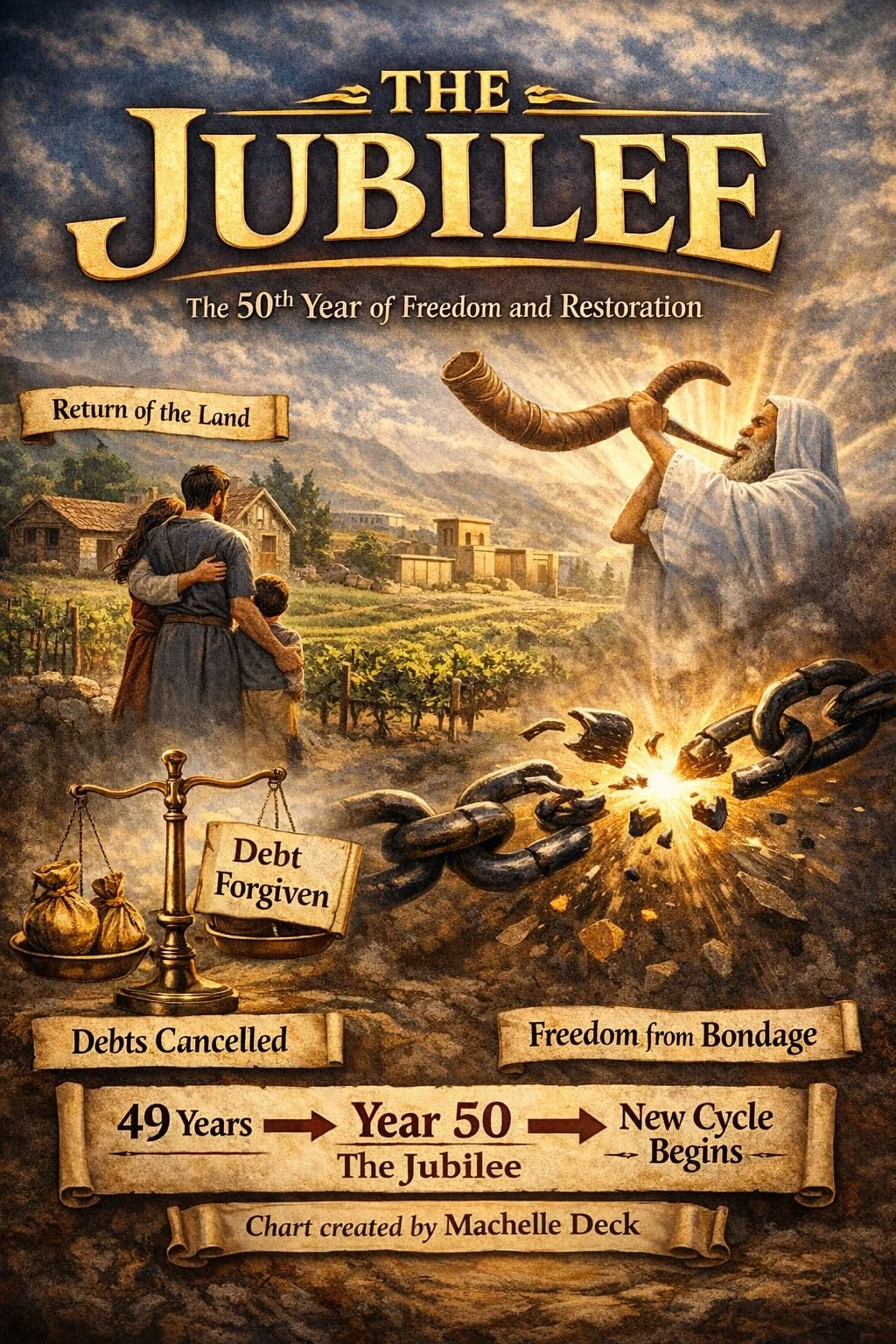
The Jubilee is God’s reset system. Every fifty years in Israel, debts were canceled, land returned to its original family, and those bound in servitude were released. It was God’s way of preventing permanent loss, permanent poverty, and permanent oppression. The Jubilee reminded Israel that the land ultimately belonged to God, that no failure was final, and that no condition of bondage was meant to last forever. It was a national picture of restoration, mercy, and fresh beginning.
The reason it matters is because it was never only about land or crops. It was a living prophecy. When Jesus came proclaiming liberty and “the acceptable year of the Lord,” He was speaking Jubilee language. The Jubilee teaches us that God’s plan moves toward restoration, not ruin. It reveals His heart, release instead of captivity, inheritance instead of loss, new life instead of permanent defeat. To understand the Jubilee is to understand redemption itself: God resets what sin broke and restores what was lost.
The timing of the Jubilee
a 49 year cycle
“And thou shalt number seven sabbaths of years unto thee, seven times seven years; and the space of the seven sabbaths of years shall be unto thee forty and nine years.” (Leviticus 25:8, KJV 1900)
the 50th year = year 1 of the cycle
“Then shalt thou cause the trumpet of the jubile to sound on the tenth day of the seventh month, in the day of atonement shall ye make the trumpet sound throughout all your land. And ye shall hallow the fiftieth year, and proclaim liberty throughout all the land unto all the inhabitants thereof: it shall be a jubile unto you; and ye shall return every man unto his possession, and ye shall return every man unto his family. A jubile shall that fiftieth year be unto you: ye shall not sow, neither reap that which groweth of itself in it, nor gather the grapes in it of thy vine undressed.” (Leviticus 25:9–11, KJV 1900)
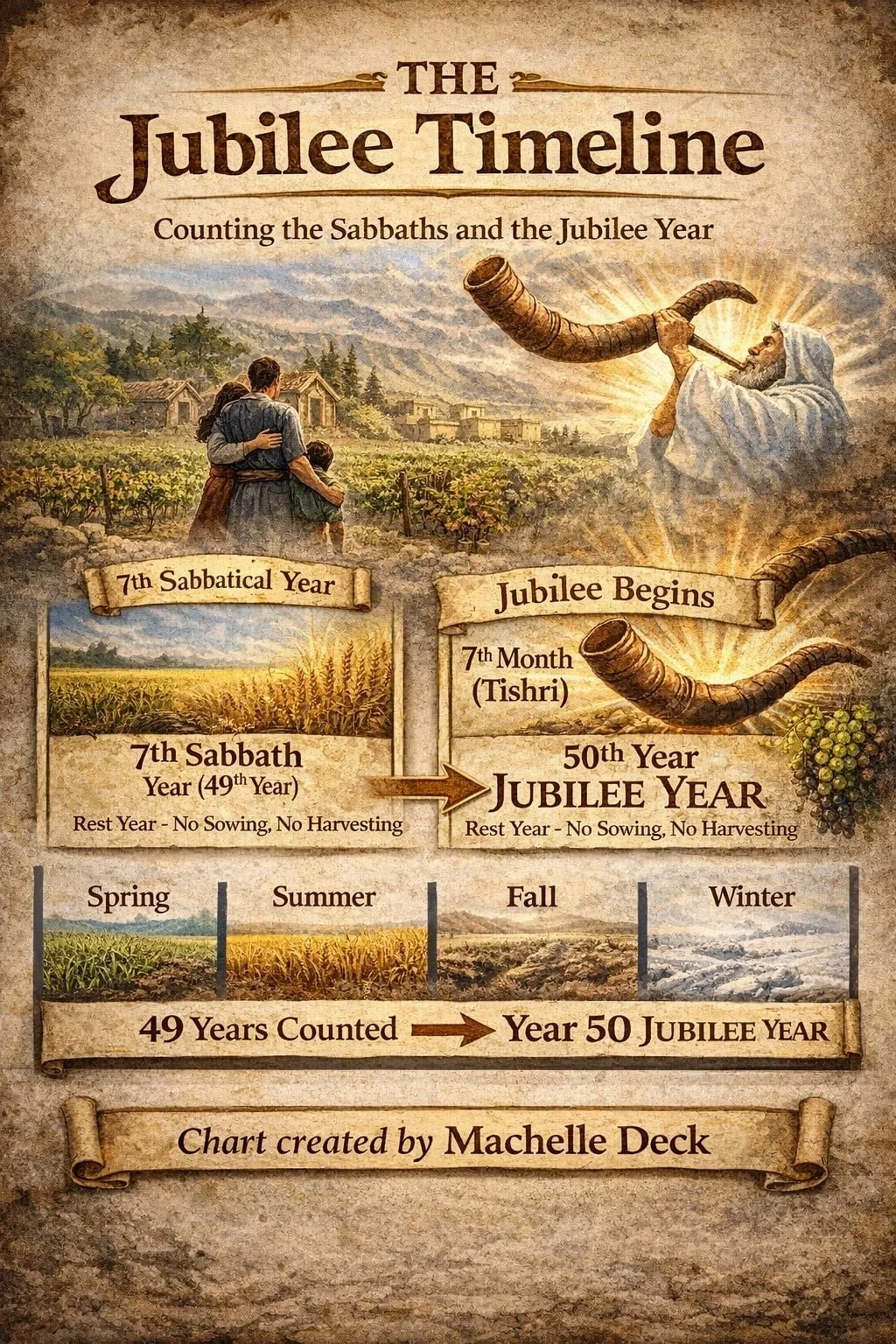
The sabbath/Jubilee years started in the fall, as shown below.
“Speak unto the children of Israel, and say unto them, When ye come into the land which I give you, then shall the land keep a sabbath unto the LORD. Six years thou shalt sow thy field, and six years thou shalt prune thy vineyard, and gather in the fruit thereof;” (Leviticus 25:2–3, KJV 1900)
But in the seventh year…
“But in the seventh year shall be a sabbath of rest unto the land, a sabbath for the LORD: thou shalt neither sow thy field, nor prune thy vineyard. That which groweth of its own accord of thy harvest thou shalt not reap, neither gather the grapes of thy vine undressed: for it is a year of rest unto the land.” (Leviticus 25:4–5, KJV 1900)
2 years of rest
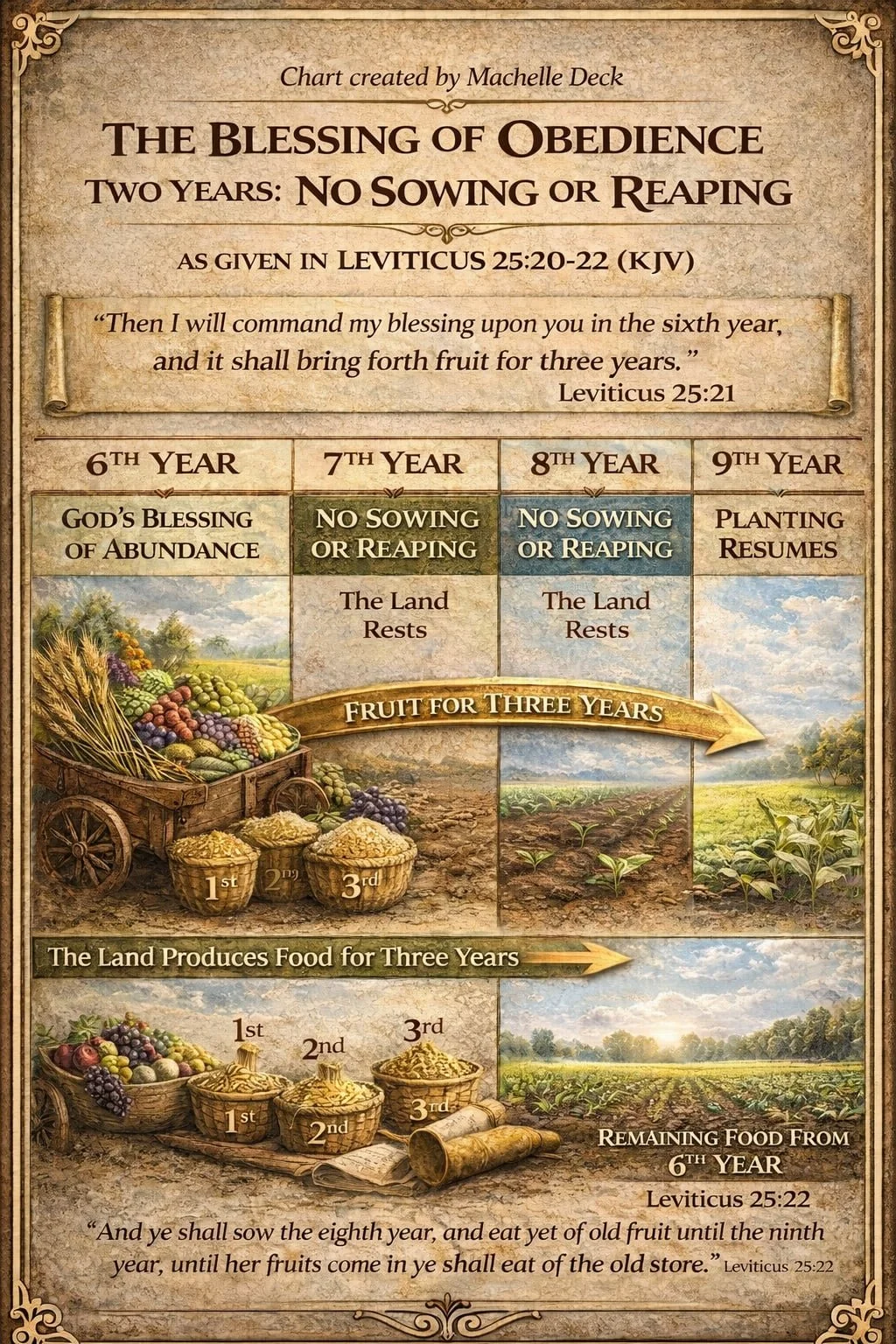
“And if ye shall say, What shall we eat the seventh year? behold, we shall not sow, nor gather in our increase: Then I will command my blessing upon you in the sixth year, and it shall bring forth fruit for three years. And ye shall sow the eighth year, and eat yet of old fruit until the ninth year; until her fruits come in ye shall eat of the old store.” (Leviticus 25:20–22, KJV 1900)
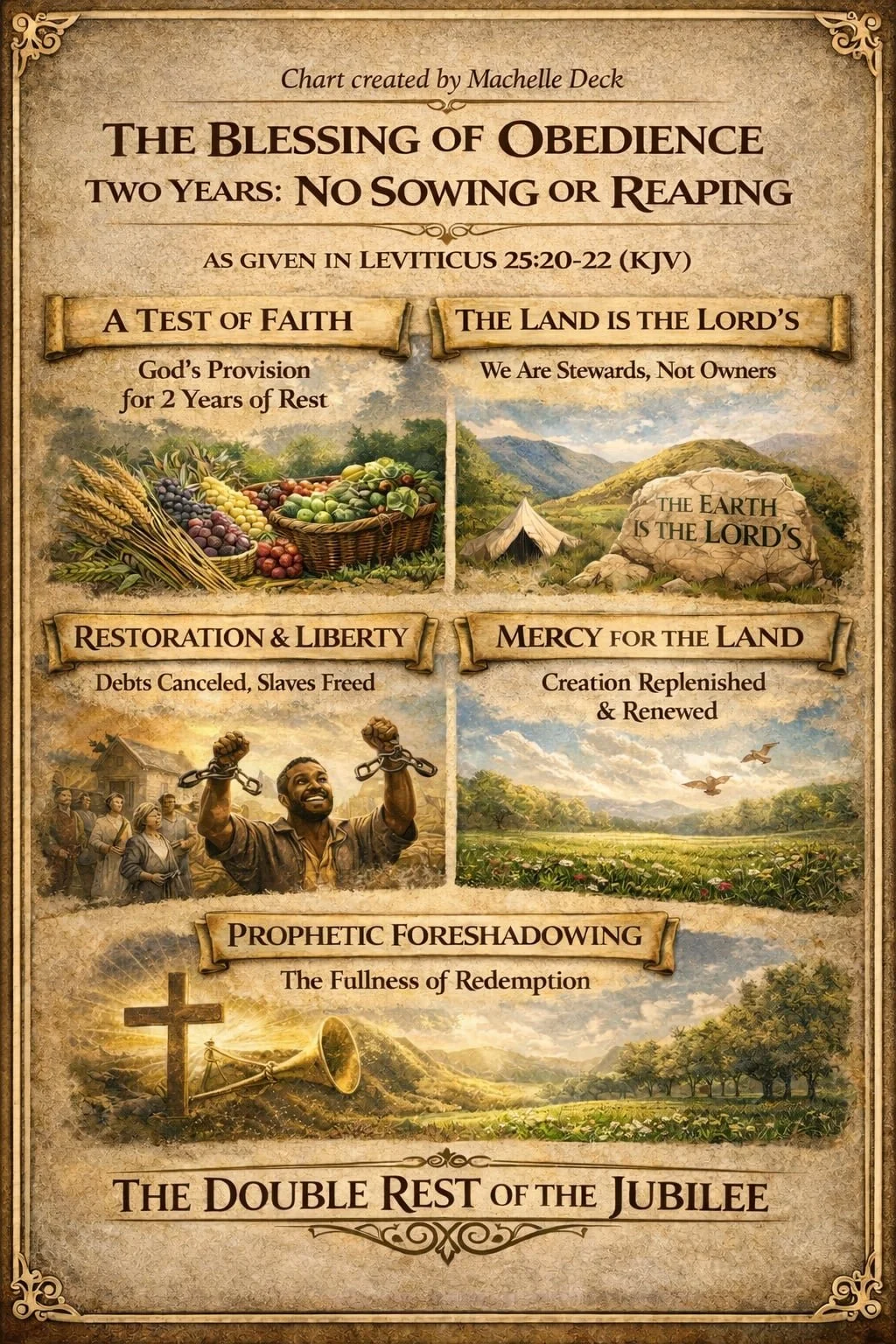
The Jubilee is the 50th year. It completes the forty nine year cycle, seven times seven, and at the same time it begins the next cycle as year one again. In Leviticus the focus is not complicated counting, but the land receiving its rest. The sixth year produces enough food, the seventh year the land rests, the eighth year, the Jubilee, the land still rests, and normal sowing resumes afterward. The emphasis is that the land belongs to the LORD and must enjoy its sabbaths. Scripture confirms this principle when Israel failed to let the land rest:
“To fulfill the word of the LORD by the mouth of Jeremiah, until the land had enjoyed her sabbaths: for as long as she lay desolate she kept sabbath, to fulfill threescore and ten years.” 2 Chronicles 36:21, KJV 1900
when & where was the jubilee announced?
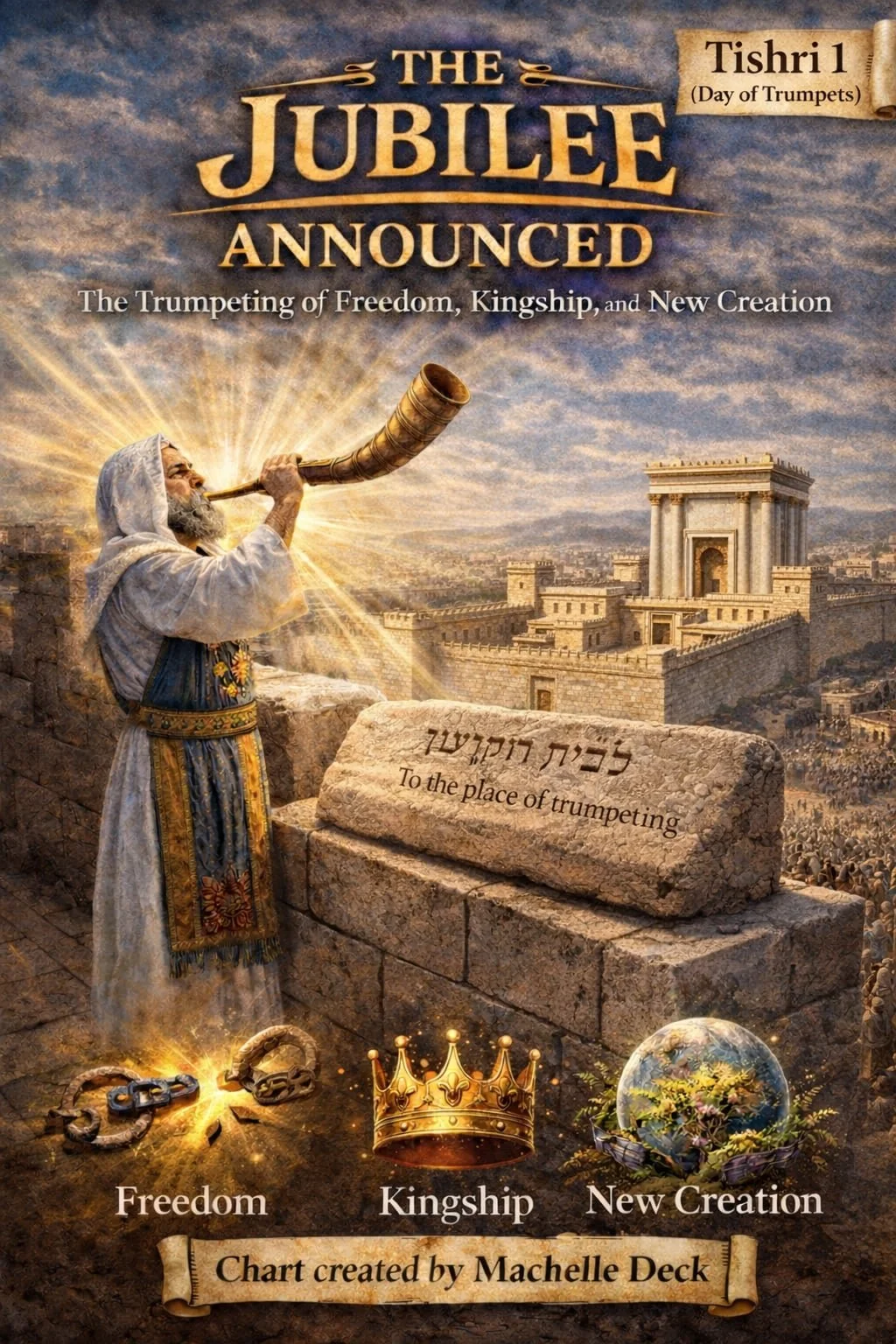
“Also in the day of your gladness, and in your solemn days, and in the beginnings of your months, ye shall blow with the trumpets over your burnt offerings, and over the sacrifices of your peace offerings; that they may be to you for a memorial before your God: I am the LORD your God.” (Numbers 10:10, KJV 1900)
“Speak unto the children of Israel, saying, In the seventh month, in the first day of the month, shall ye have a sabbath, a memorial of blowing of trumpets, an holy convocation.” (Leviticus 23:24, KJV 1900)
What is the meaning of Feast of Trumpets?
The Trumpets is the only feast that begins with a loud public announcement.
Symbolizes:
Kingship - The trumpet announces the arrival or enthronement of a king. In Scripture, the sounding of the trumpet is connected with the LORD reigning and Messiah being revealed as King.
“And Zadok the priest took an horn of oil out of the tabernacle, and anointed Solomon. And they blew the trumpet; and all the people said, God save king Solomon.” (1 Kings 1:39, KJV 1900)
Judgment:
The trumpet is also a warning sound. It alerts the people that the Day of the LORD is near, a time of accountability and divine judgment.
“Blow ye the trumpet in Zion… for the day of the LORD cometh, for it is nigh at hand.”
(Joel 2:1, KJV 1900)
New creation:
The trumpet marks a new beginning. The Feast occurs at the turn of the civil year, symbolizing renewal and restoration.
“For, behold, I create new heavens and a new earth…”
(Isaiah 65:17, KJV 1900)
“And he that sat upon the throne said, Behold, I make all things new.”
(Revelation 21:5, KJV 1900)
The trumpet implies transition, the closing of one order and the beginning of another.
Divine visitation
Throughout Scripture, the trumpet accompanies the visible or manifest presence of God.
“And it came to pass on the third day in the morning… and the voice of the trumpet exceeding loud… and mount Sinai was altogether on a smoke, because the LORD descended upon it.”
(Exodus 19:16–18, KJV 1900)
“For the Lord himself shall descend from heaven with a shout, with the voice of the archangel, and with the trump of God…”
(1 Thessalonians 4:16, KJV 1900)
The trumpet implies that God is drawing near, visiting His people, whether in revelation, covenant, or final appearing.
“God is gone up with a shout, The LORD with the sound of a trumpet.” (Psalm 47:5, KJV 1900)
the announcement
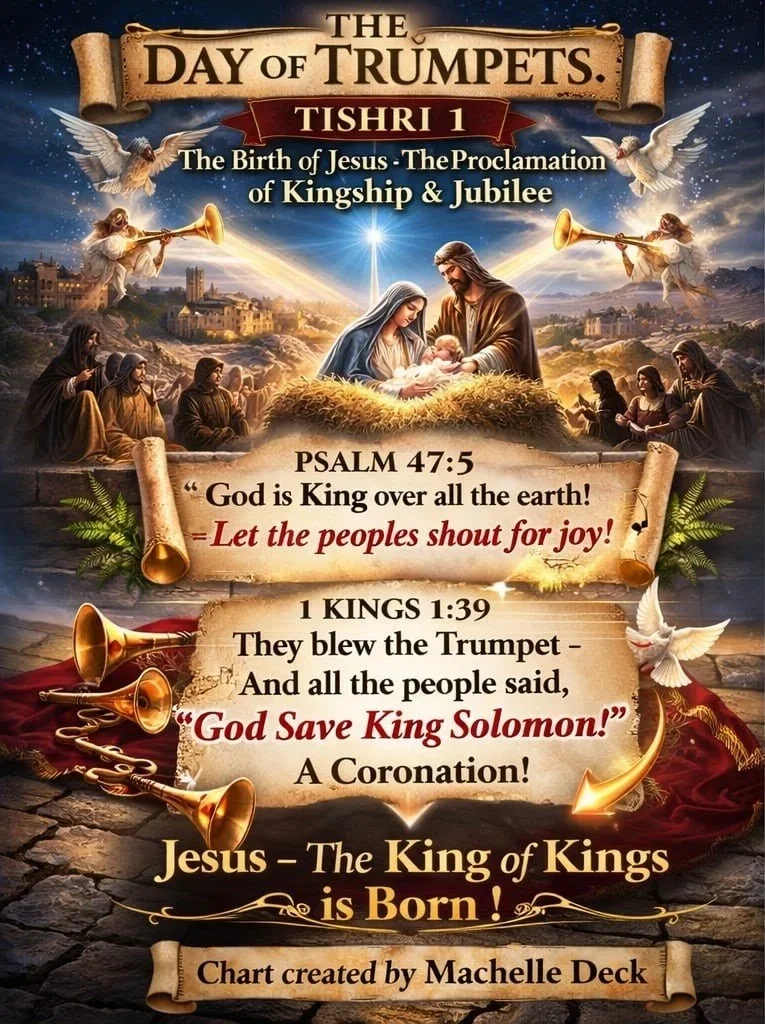
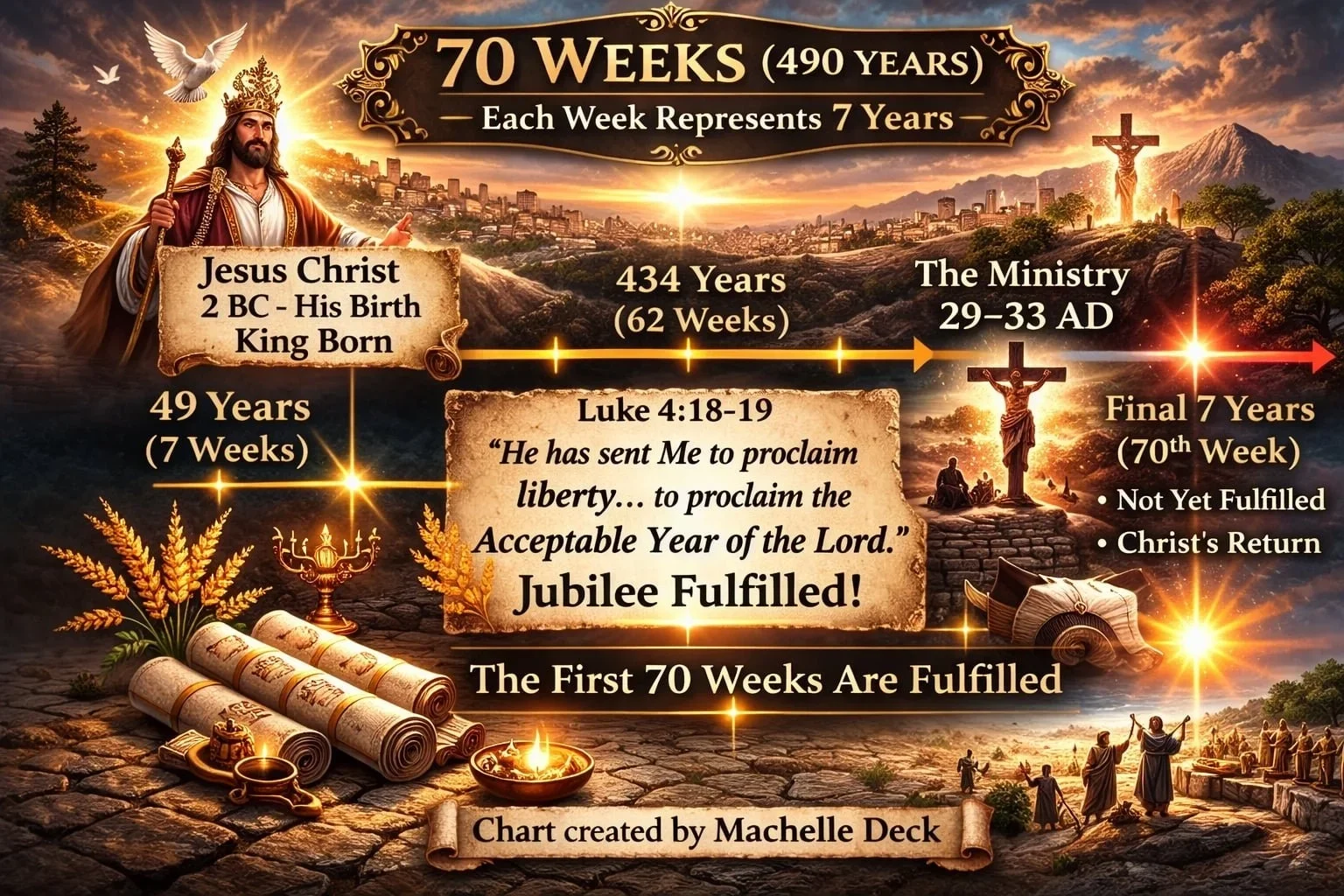
If Jesus was born on the Feast of Trumpets, the very day associated with proclamation, kingship, and the announcing of new eras, then His birth itself becomes a declaration. Trumpets in Scripture announce kings and turning points. His life then unfolds within the framework of Daniel’s seventy weeks, a 490 year prophetic timeline. When His ministry culminates in His death and resurrection in 33 AD, that seventy week period is completed. The dates are not random. They serve as time markers showing that history was moving toward a specific fulfillment.
This is why 2 BC and 33 AD matter. They frame the beginning and completion of the first 490 years. The timeline, the proclamation imagery, and the Jubilee language all converge in Christ. The argument is not merely symbolic but chronological. The alignment of prophetic time with historical events strengthens the claim that Jesus is not simply a teacher within history, but God Himself coming in the flesh. That is why these timelines converge, to bring that conclusion into focus. And just as the first advent was precisely timed and prophetically fulfilled, this strengthens the conviction that the second advent will be just as prophetic, just as precise, and just as connected to the seventy week framework as the first advent was.