The Bible That Jesus Taught From: The Septuagint
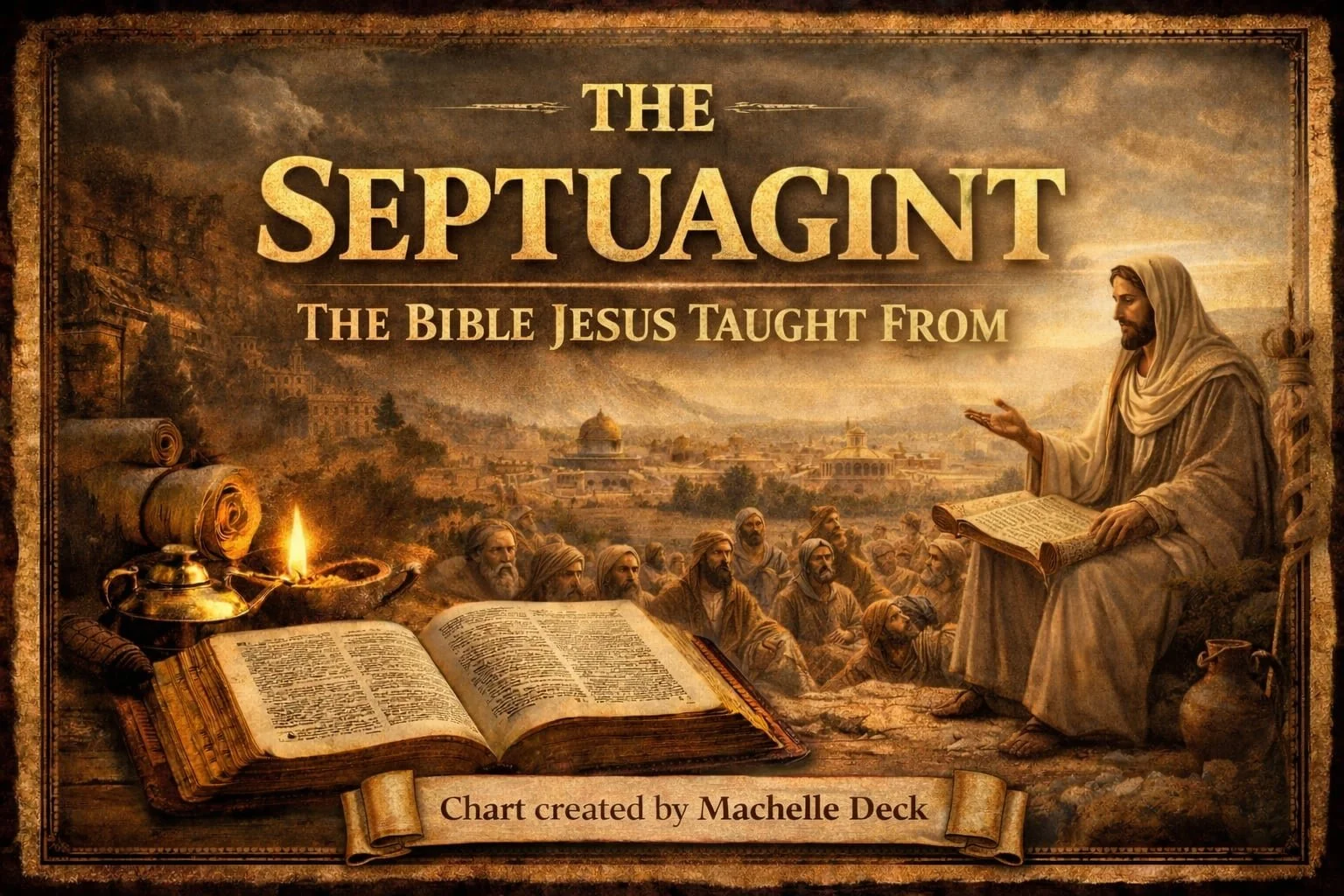
What IS THE SEPTUAGINT?

and the daniel exception
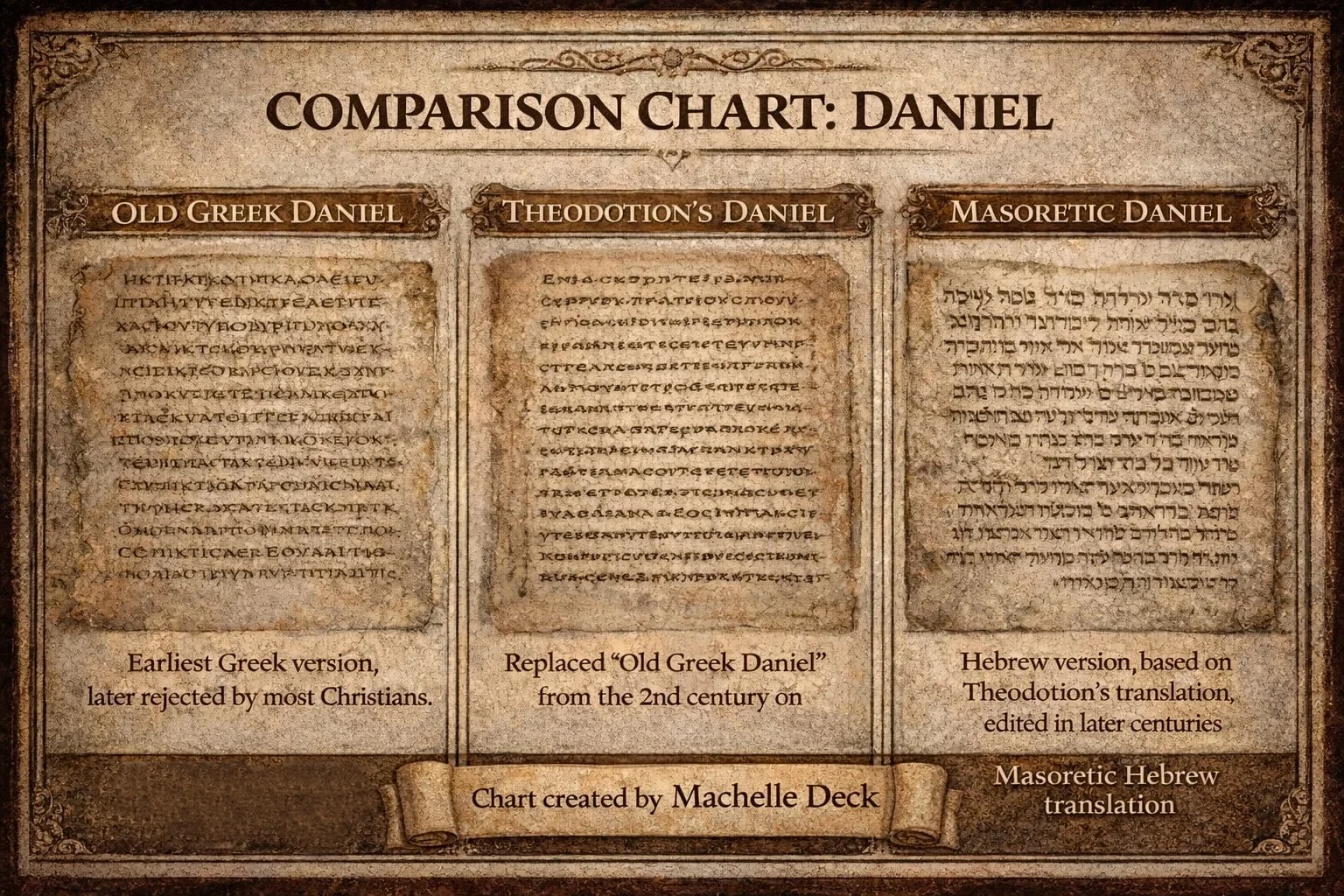
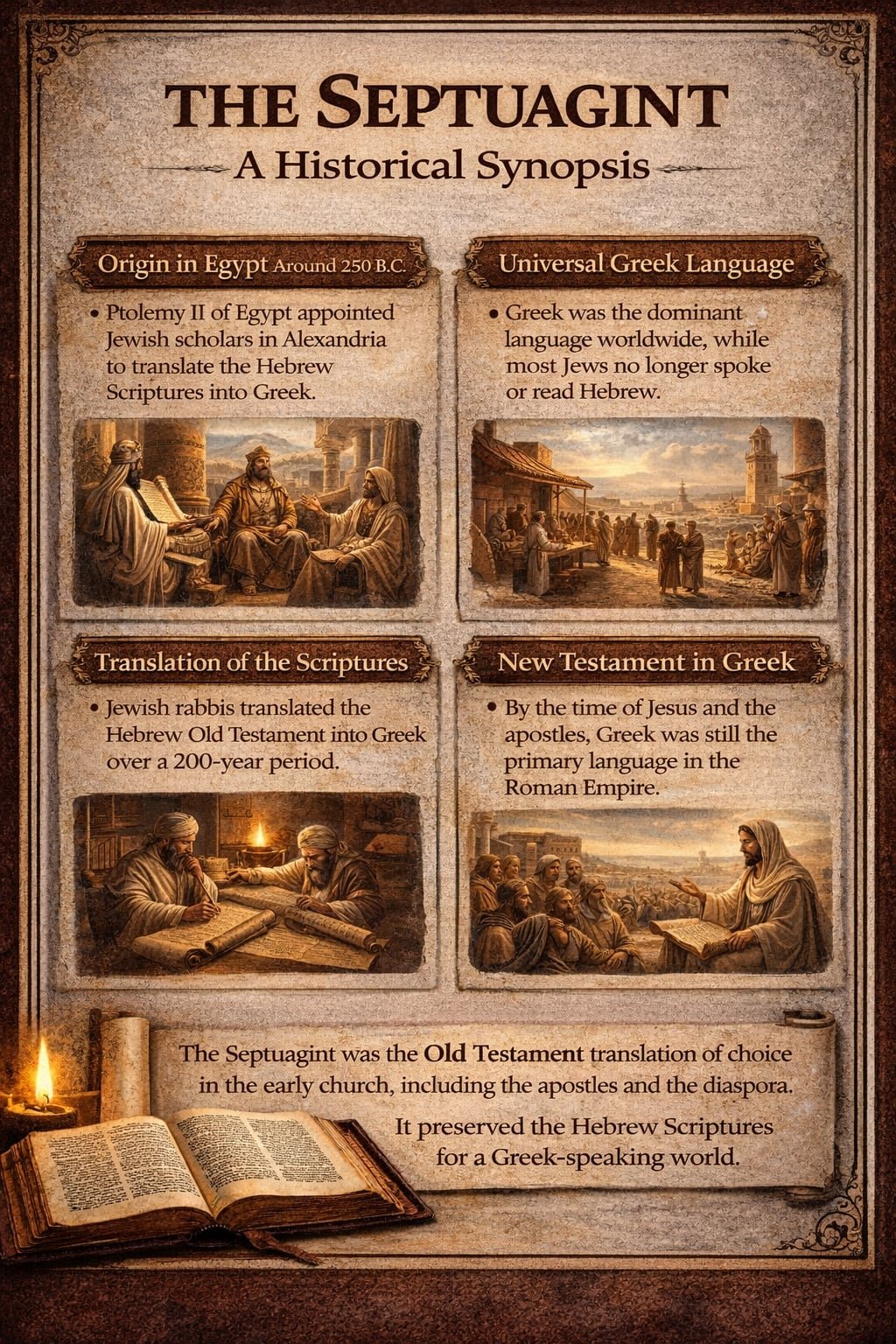
The Septuagint, often abbreviated LXX, is the ancient Greek translation of the Old Testament. It began around 250 B.C. when Jewish scholars translated the Hebrew Scriptures into Greek, the dominant language of the world at that time. Over the next two centuries, the rest of the Old Testament was translated into Greek as well. By the time of Christ, Greek was widely spoken throughout the Roman Empire. Many Jews living outside of Israel used the Septuagint in their synagogues. The Greek Bible was widely accepted by the Christian population; however, there is one important exception, the book of Daniel. The earliest Greek version of Daniel, sometimes called the Old Greek Daniel, was originally part of the Septuagint. But early Christians found that version difficult to use and eventually replaced it with a different Greek translation made by Theodotion in the second century A.D. From that point forward, most Christian copies of the Septuagint included Theodotion’s version of Daniel instead of the older Greek version. As a result, the original Old Greek manuscript tradition of Daniel largely fell out of use and was eventually lost in full form. Some portions of Daniel were preserved in Hebrew and Aramaic in the Masoretic tradition.
Meanwhile, Paul of Tella preserved the original Greek version of Daniel in Aramaic/Syriac in 616 A.D., but for centuries, Bible translations relied primarily on Theodotion’s Greek version of Daniel rather than the earlier Old Greek version. It was not until modern times that scholars recovered and translated the Old Greek version of Daniel into English. A major English translation appeared in 2007 the NETS Bible, and in 2012 the Lexham English Septuagint, often abbreviated LES, also included the Old Greek Daniel. So while the Septuagint represents the Greek Old Testament used widely in the ancient world, the book of Daniel stands as a unique case where the commonly transmitted Greek version was actually a later revision by Theodotion rather than the earliest Greek translation.
History of the septuagint
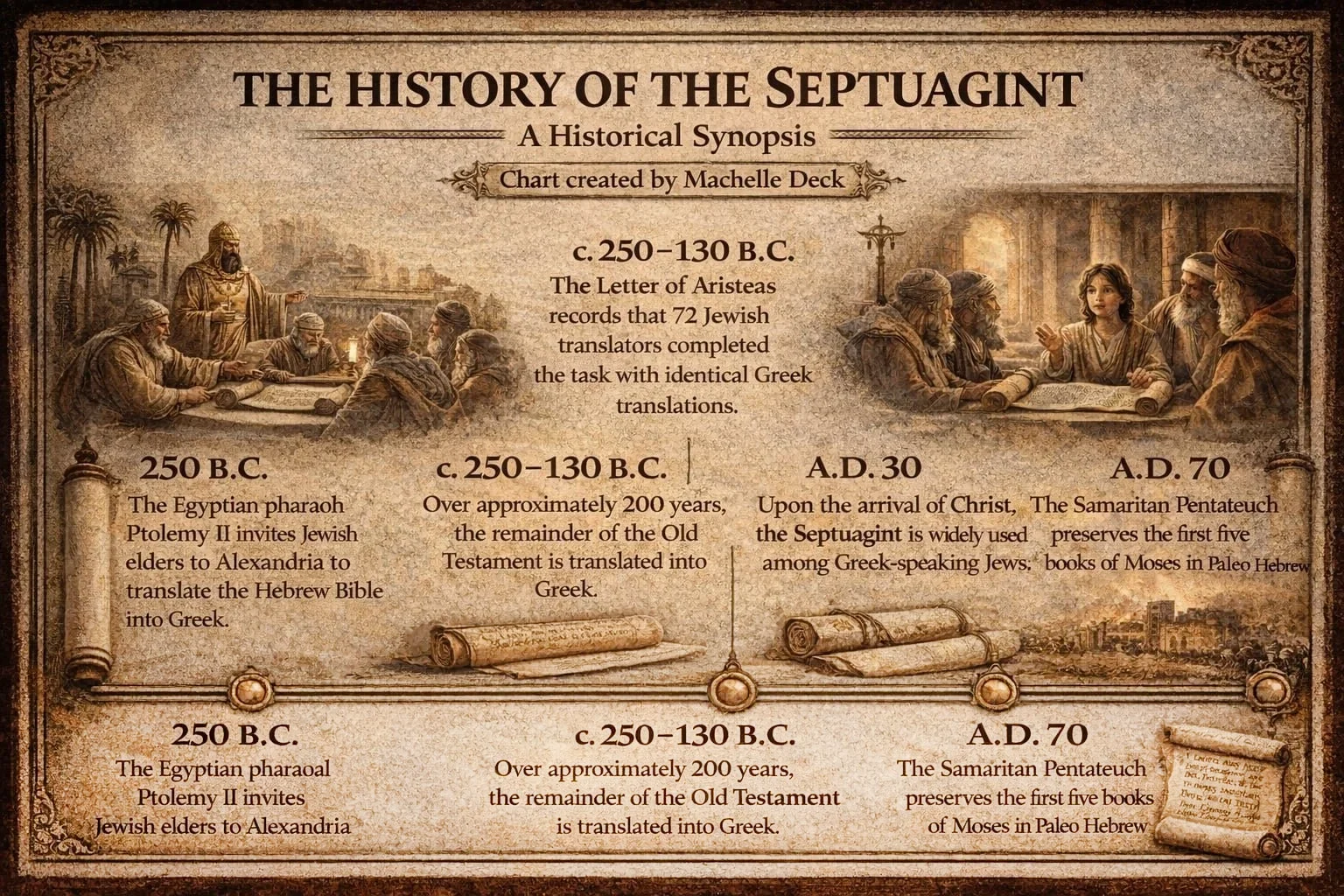
A Historical Synopsis Around 250 B.C., during the reign of Ptolemy II Philadelphus of Egypt, a significant shift occurred in the preservation of Scripture. The Hebrew Scriptures, particularly the first five books of Moses, were translated from Paleo Hebrew into the dominant language of the known world, Greek. This translation project took place in Alexandria, Egypt. Jewish rabbis, who still understood the ancient Hebrew text, were brought to Alexandria to carry out the work. According to an ancient historical document known as the Letter of Aristeas, seventy, or traditionally seventy two, Jewish elders were commissioned for this task.
The Roman numeral abbreviation LXX, which is used to refer to the Septuagint, means seventy, reflecting the number of translators associated with this work. The Letter of Aristeas records that the translators worked and came into full agreement, producing identical translations. Whether one understands this detail as literal history or preserved tradition, the account underscores the unity and reverence surrounding the translation of the Law into Greek. Over approximately the next 200 years, the remainder of what we call the Old Testament was translated into Greek.
This Greek translation became known as the Septuagint, often abbreviated as LXX. Greek was the universal language of commerce, scholarship, and governance throughout this era. Hebrew had largely ceased to function as a spoken language among the general population. Paleo Hebrew in particular was no longer widely understood, except by a small number of learned rabbis. By the time of Christ, Greek remained the dominant language across the Roman Empire. This is reflected in the New Testament itself.
The Gospel of John begins: “In the beginning was the Word, and the Word was with God, and the Word was God.” John 1:1, KJV 1900 The very word “Word” in the Greek text is Logos, demonstrating that the Gospel record itself was written in Greek for a Greek speaking world. When Jesus was found in the temple at twelve years old, “sitting in the midst of the doctors, both hearing them, and asking them questions” (Luke 2:46, KJV 1900), this occurred in a world where Greek was the dominant cultural language.
The Septuagint was widely used among Jews of the dispersion and in synagogues outside Judea. In A.D. 70, with the destruction of Jerusalem and the temple, Paleo Hebrew effectively disappeared as a living tradition. However, the first five books of Moses were preserved in what we now call the Samaritan Pentateuch, which remains available today and serves as a witness to the ancient textual tradition.
therefore
Thus, the Septuagint emerged not as a replacement of Scripture, but as a providential preservation of Scripture for a Greek speaking world. It bridged the Hebrew revelation into the dominant language of the era in which Christ lived, taught, and was proclaimed.

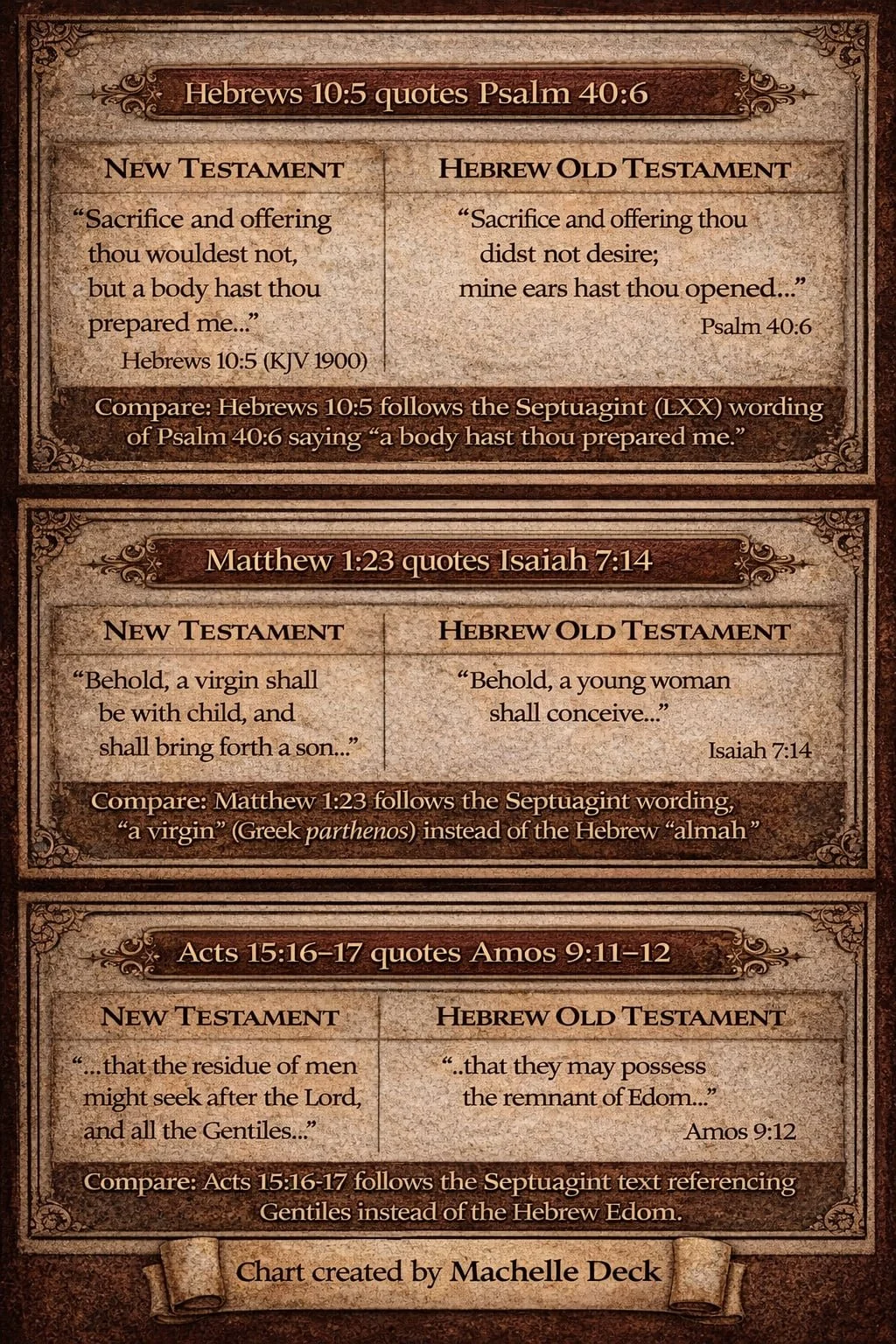
Below are clear examples where the New Testament wording aligns more closely with the Septuagint (LXX) than with the later Masoretic Hebrew tradition. I will quote the KJV 1900 for the New Testament, then show the Old Testament source and explain briefly. ────────────────────────
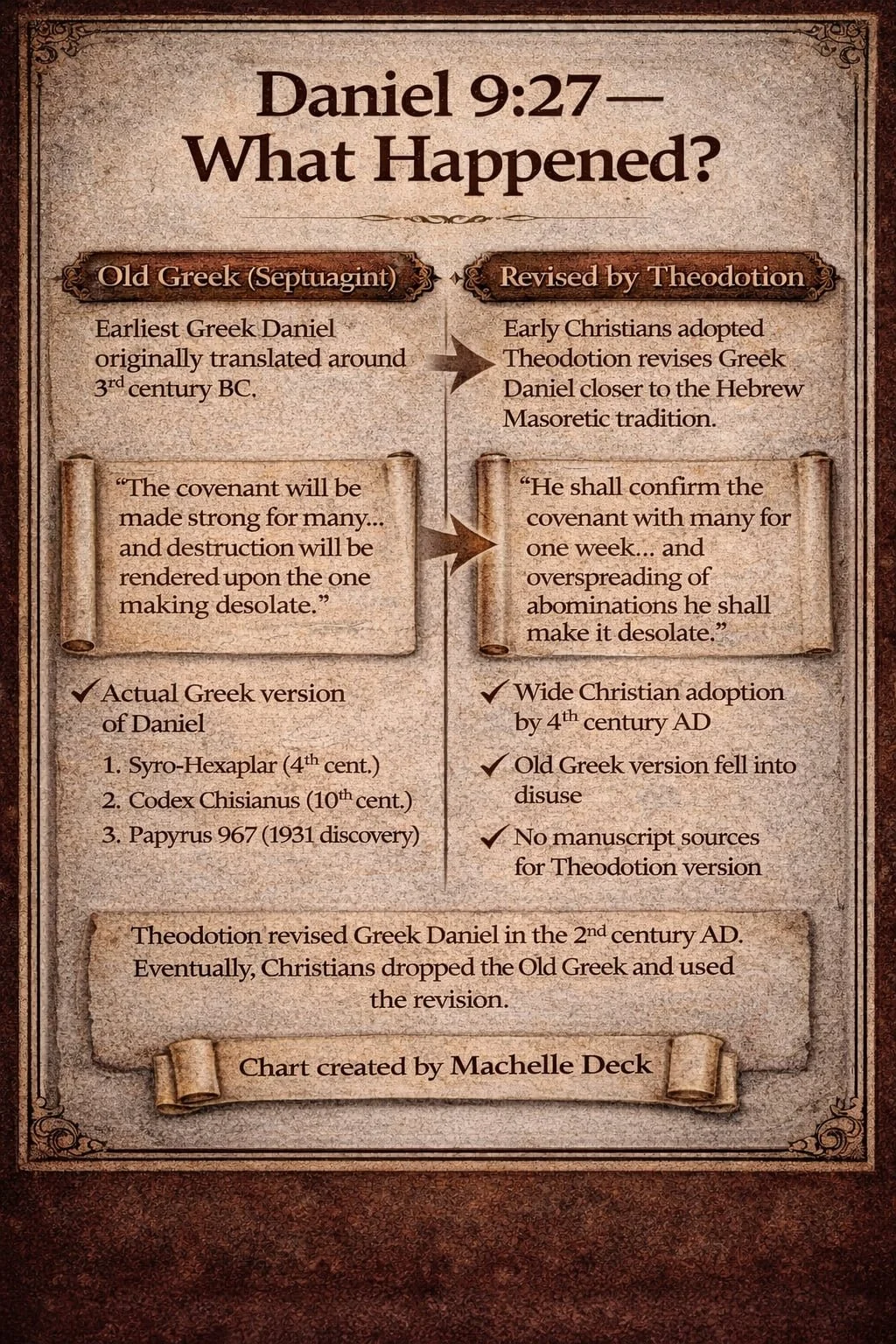
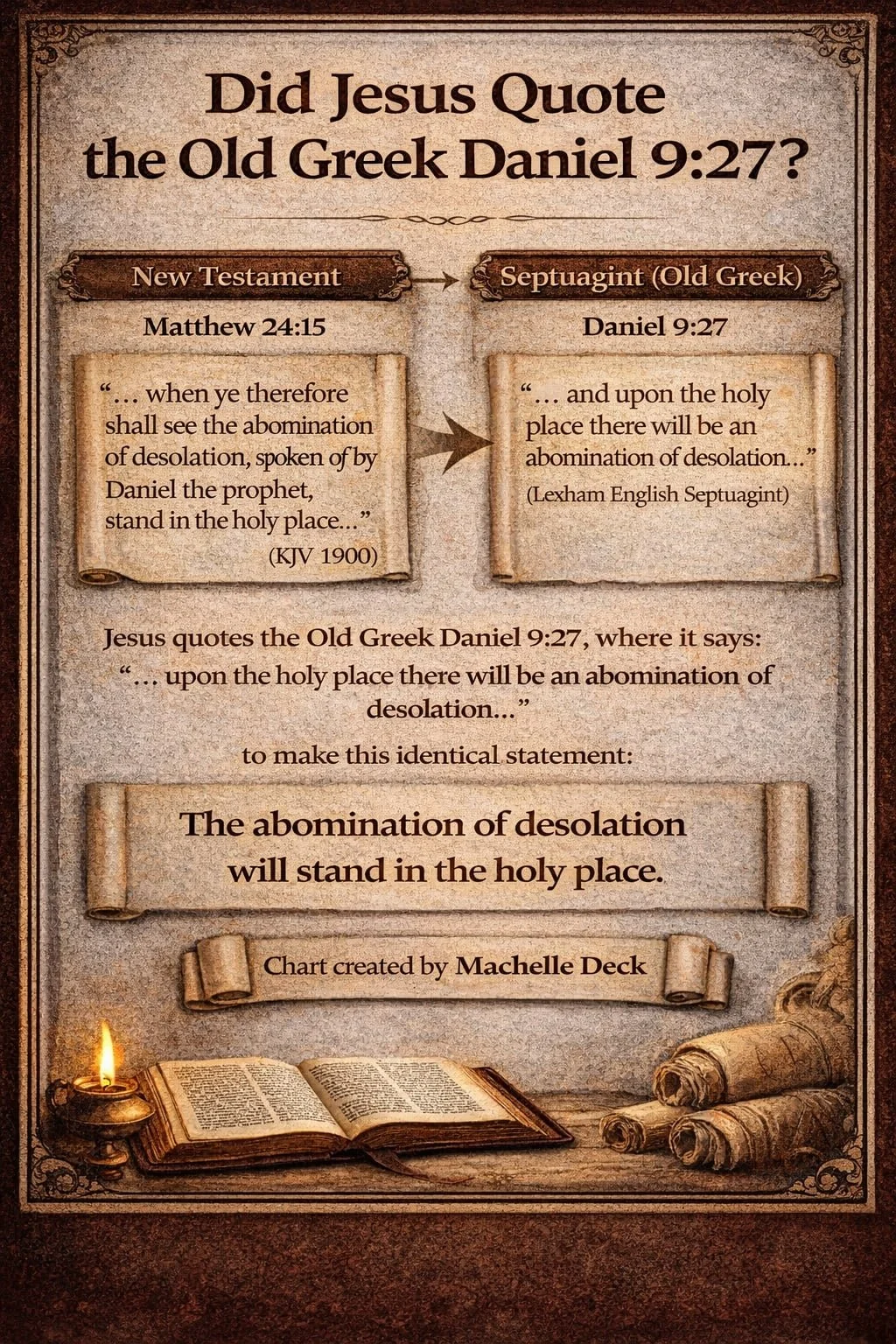
The old Greek daniel 9:27
conclusion
“How shall we escape, if we neglect so great salvation; which at the first began to be spoken by the Lord, and was confirmed unto us by them that heard him;” (Hebrews 2:3, KJV 1900)
The Septuagint is important because it shows us how God preserved His Word for the world at the right time in history. When Greek became the dominant language, God did not allow His truth to remain locked in a language few could understand. He allowed His Word to be translated so it could be read, taught, and proclaimed across nations. By the time Jesus walked the earth, the Scriptures were accessible in the language of the people. The apostles preached from it. The early church used it. The message of Christ spread through it. As Scripture itself declares: “All scripture is given by inspiration of God, and is profitable for doctrine, for reproof, for correction, for instruction in righteousness.” 2 Timothy 3:16, KJV 1900 The Septuagint was not a replacement of God’s Word, but a vehicle for it. It carried the inspired message into a Greek speaking world so that salvation could be proclaimed. In simple terms: God preserved His Word. God positioned His Word. God proclaimed His Word. And the Septuagint was part of that providential plan.